‘Kindling’ A 2012 Fave

Kindling

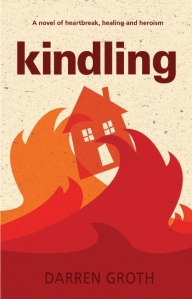
It may have been released 14 dog years ago, but Kindling has still found its way onto a ‘Best Of 2012’ list.

With the help of Santa and his Bob Dylan ‘Subterranean Homesick Blues’-esque impression, the Casey-Cardinia Library Corp recently put together their best reads of the past year and a certain little story of heartbreak, healing and heroism made the grade (Thx, Deb!).  Indeed, it was considered a shade better than The Light Between Oceans.  Given what’s gone down with that novel over the past twelve months, it’s high praise indeed.

Mr Spielberg, let’s do lunch.

The Real Writer – A Do’s and Don’ts Guide #5

We’ve finished the four Don’ts – time now to have a look at the corresponding Do’s.  First up:

Real writers do the trade every day.

Any number of author voices more resonant than mine have extolled the virtues of turning up.  Stephen King advocated “bum glue”.  Jane Yolen referred to “exercising the writing muscle”.  Lawrence Kasdan suggested “being a writer is like having homework every night for the rest of your life”.  No doubt engaging with your story on a daily basis is a must.  But what’s the deal for emerging authors: the folks who are chasing creativity behind jobs and kids and mortgages and slush piles and rejection slips,  whose days are invariably full while their pages are often empty?

Continue reading “The Real Writer – A Do’s and Don’ts Guide #5”

The Real Writer – A Do’s and Don’ts Guide #4

Real writers don’t leave work unfinished.

During my emerging author days, a noted publishing industry insider told me: “You’d be amazed at the number of writers you get ahead of just by finishing.”  Another informed me:  “There is only one truism in publishing – if you never finish the story, you’ll never see the book.”  Finishing is important, just as important as starting.  And many argue it’s a lot tougher than its ‘creative honeymoon’ counterpart.   

Continue reading “The Real Writer – A Do’s and Don’ts Guide #4”

The Real Writer – A Do’s and Don’ts Guide #3

Real writers don’t make excuses.

People have told me I have a lot of ‘life’ excuses to not write.  I have a beautiful wife.  I have two wondrous kids, one of whom has autism.  I enjoy time with friends and family.  I work.  I have a mortgage.  I am the ultimate armchair sports fan.  I never turn down a beer.  I have an unhealthy fondness for karaoke.

Continue reading “The Real Writer – A Do’s and Don’ts Guide #3”

The Real Writer – A Do’s and Don’ts Guide #1

Many emerging authors ask me what it takes to be a ‘real writer’.  Is it writing a novel, getting a degree, finding an agent?  Is it getting published, winning an award, making a living?  My reply is always a much simpler proposition: is writing what you do?  Not what you like, or what you want.  What you do.

To help you determine if you’re a real writer, I’ve compiled a guide of four do’s and don’ts of the trade.  Over the next few weeks, I’ll examine each in some detail.  First up – one of my favourite ‘don’t’s:

Real writers don’t talk about how they’ll write a book one day.

Continue reading “The Real Writer – A Do’s and Don’ts Guide #1”

You Need To Concentrate


Yes.  You do.

So, purchase the acclaimed Aussie YA novel from here.  It’s only $3.99.  It will do wonders for your book smarts.

And, as an added little bonus, why not get some insight into the collaborative process of the Brothers Groth via the younger BG, Simon.  Here’s a snippet:

We have tried collaboration before a few times. We tried taking alternate chapters. We tried taking on different characters. Nothing really worked and I consigned the whole endeavour to the ‘revisit one of these days’ file. Little did I know Darren was hatching his own variation on the concept.

What we eventually hit on was taking alternate drafts. The result was similar to writer-editor only with the editor taking a far more active role adding character layers and additional narrative. Our model was less ’50 per cent text each’ and something more like what Joel and Ethan Coen do: share the writing credits where one or the other might take the lead on any individual project. Seems to work well for them. Why not us? We are already brothers after all.

Catch the rest of it at Simon’s fine online home.

The ‘Never Dead’ Principle

If there’s one thing I’ve learned as an author – and let’s face it, this might be the only thing I’ve learned – it’s the ‘never dead’ principle.  A manuscript, a short story, a book that for all intents and purposes appears to have been pine-boxed can rise up out of the ground and zombie along into new momentum.

I’ve experienced this with pretty much all my work, most notably my second published book, Most Valuable Potential (I won’t go into the gory details – suffice to say I believed it deader than a canary in a toxic mine the day it was shortlisted for the Queensland Premier’s Literary Awards).  And just this week, Kindling joined the resuscitated ranks of its predecessors.

What gave it the kiss of life?  Nothing so dramatic as a major award shortlisting; just a very kind, very affecting, very passionate review from someone who read Kindling for the first time, eighteen months after its joyous birth and twelve months after its doleful passing.  It demonstrated to me once again that work out in the world makes its own way, in it’s own time.  It assured me there is an immortality to words an author commits to the page; an unceasing story pulse that may vary between frenetic and faint, but ultimately won’t ever fail.

It was a timely reminder of the ‘never dead’ principle.